Knowing how to prepare a chicken coop for winter is the single best thing you can do for your flock before the cold sets in. Winter can be wonderful with its sparkle and festivities, but for much of the time it is cold, wet and windy – and your hens will spend far more of their day indoors. A quick autumn once-over now means a dry, draught-free, predator-proof coop that keeps your birds healthy through the worst of the weather.
Short answer: To winterize a chicken coop, make sure it is dry and leak-free, draught-proof but still well ventilated, with deep dry bedding, water that will not freeze, a sheltered run, and solid, predator-proof construction. Give it a thorough pre-winter clean and you are good to go – no heating required.
Winter Chicken Coop Checklist
Here is the at-a-glance checklist for getting chickens ready for winter. Each point is explained in full below.
- Check ventilation works without creating draughts
- Draught-proof holes, splits and gaps
- Keep bedding deep and dry (consider the deep litter method)
- Stop drinking water from freezing
- Cover and shelter the run from wind and rain
- Check the coop is solid, stable and predator-proof
- Adjust for shorter daylight and reduced laying
- Give the coop a proper pre-winter deep clean
Check Ventilation Without Creating Draughts
Good ventilation is the part most keepers get wrong when they winterize a chicken coop. It is tempting to seal everything up against the cold, but chickens breathe out a lot of moist air overnight, and that humidity needs somewhere to go. Trapped damp is what leads to chills and respiratory problems – not cold air itself. The aim is gentle airflow high up, above roosting height, that lets stale moist air escape without blowing directly onto your perched birds. A coop with vents near the roof but a solid, gap-free lower section gives you exactly that balance.

Draught-Proof Holes, Splits and Gaps
Ventilation is good; draughts are not. A draught is cold air moving across your birds at roosting level, and over a long winter night it strips away the warmth their feathers work so hard to trap. Go over the coop and check for holes, splits and worn gaps, especially around doors, joints and the base. Timber coops are particularly prone to splitting and warping as they age, so look closely. Seal what you can at low level while keeping those high vents clear. For more on how your hens use that trapped warmth, see our guide on how chickens stay warm in winter.
Keep Bedding Deep and Dry
Dry bedding is the foundation of a warm coop. Damp litter chills birds, rots the floor and breeds the kind of moisture that causes respiratory trouble, so if you spot damp patches when you change the bedding, treat it as a warning sign. Top up generously through winter so there is a deep, dry, insulating layer underfoot. Some keepers use the deep litter method, regularly adding fresh material on top so the lower layers compost gently and give off a little warmth – just keep it dry and never let it go soggy. If you are weighing up your options, our guide to the best bedding for chicken coops walks through the choices.
Stop Drinking Water From Freezing
Frozen drinkers are one of winter's biggest daily headaches. Chickens need constant access to fresh, unfrozen water, and a hen that cannot drink will quickly stop eating and laying too. Site drinkers out of the wind, check them at least twice a day in a freeze, and consider an insulated or heated drinker base if you regularly get hard frosts. We have a whole guide on how to prevent your poultry drinkers from freezing in winter with practical tricks that save you time on icy mornings.
Cover and Shelter the Run
Chickens dislike driving rain and biting wind even more than cold, and a soggy, exposed run keeps them cooped up and miserable. Covering part of the run with a solid or clear roof, and adding a windbreak along the most exposed side, gives your flock a dry place to scratch and dust-bathe whatever the weather. It also keeps the ground from turning to mud, which helps with hygiene and keeps muddy droppings out of the coop. A dry, sheltered run makes a real difference to how active and content your hens stay through winter.
Check the Coop Is Solid and Predator-Proof
Winter storms and hungry predators both test a coop's strength. Strong winds can flip a lightweight coop, so make sure yours is stable and well anchored. At the same time, food is scarce in winter and rodents and larger mammals are all looking for an easy meal, so check that mesh, latches and access points are secure and undamaged. A solid, well-built coop with no weak points keeps your flock safe on the wildest nights.

Adjust for Shorter Days and Reduced Laying
As daylight fades, your hens will spend longer in the coop and many will naturally slow down or stop laying for the season – this is normal and lets them rest and grow new feathers. Because birds are shut in earlier and longer, a coop that is the right size for your flock matters: snug enough for them to huddle and share body heat, but never overcrowded. For the bigger picture of how your birds change through the colder months, our overview of how to help chickens keep warm in winter and what to feed chickens in winter are well worth a read.
Give the Coop a Pre-Winter Deep Clean
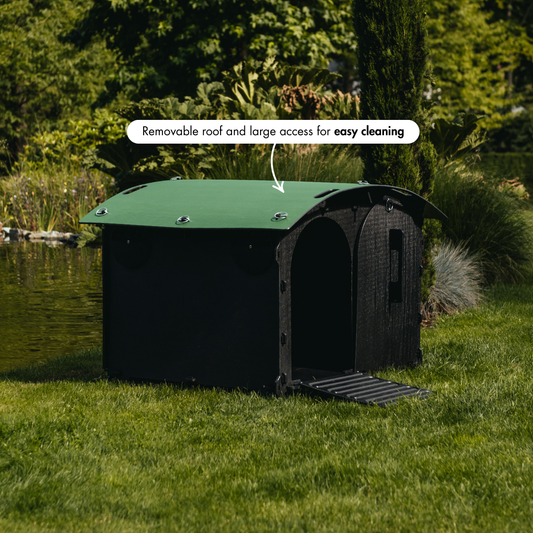
Before the cold really arrives, give the whole coop a proper deep clean. Strip out all the old bedding, scrub down surfaces, and check the nooks and joints where red mites love to hide – you do not want a parasite problem brewing in a coop your birds are about to spend all winter in. A smooth, easy-clean coop with few cracks makes this job far quicker, which is exactly why so many keepers move away from timber. Start the season with a fresh, clean, dry coop and deep new bedding, and your flock is set up to thrive.
Do You Need to Heat a Chicken Coop in Winter?
In almost all cases, no. Healthy, fully feathered hens produce plenty of their own heat and have layers of down to keep snug, especially after a hearty afternoon feed. Heat lamps also pose a serious fire risk and can stop birds acclimatising naturally to the cold. Your job is not to heat the coop but to keep it dry, draught-free and well ventilated so your hens' own insulation can do the work.
Frequently Asked Questions
How do I prepare a chicken coop for winter?
Make the coop dry and leak-free, draught-proof at roosting level while keeping high vents open, lay down deep dry bedding, stop water freezing, shelter the run, check it is solid and predator-proof, and give it a thorough deep clean before the cold sets in.
Should I heat my chicken coop in winter?
Usually not. Fully feathered, healthy hens cope well with cold as long as the coop is dry, draught-free and ventilated. Heat lamps are a fire hazard and are best avoided; focus on dry bedding and good shelter instead.
How do I keep my chickens' water from freezing?
Site drinkers out of the wind, check them at least twice a day in a freeze, and use an insulated or heated drinker base in hard frosts. See our full guide on stopping poultry drinkers freezing for more.
Do chickens stop laying in winter?
Many hens slow down or pause laying as daylight shortens, which is completely natural. They use the rest to recover and grow new feathers, and most return to laying as the days lengthen again in spring.
The Easy Way to a Winter-Ready Coop
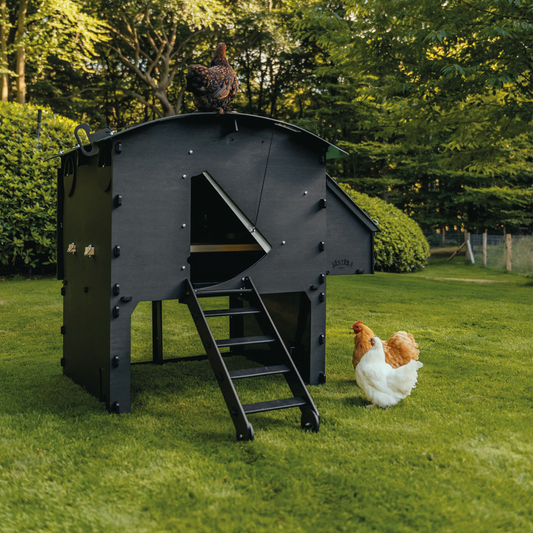
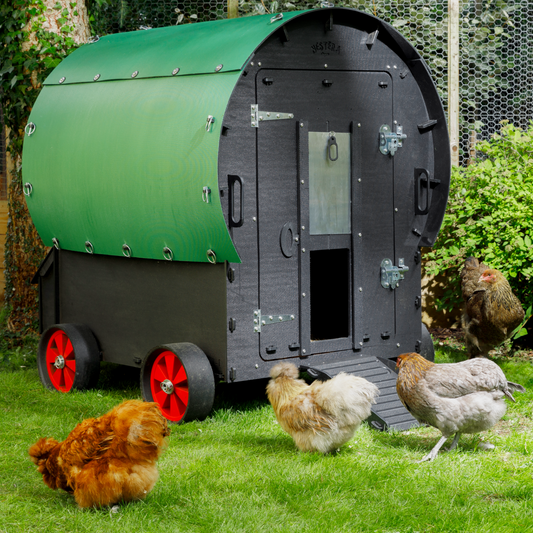
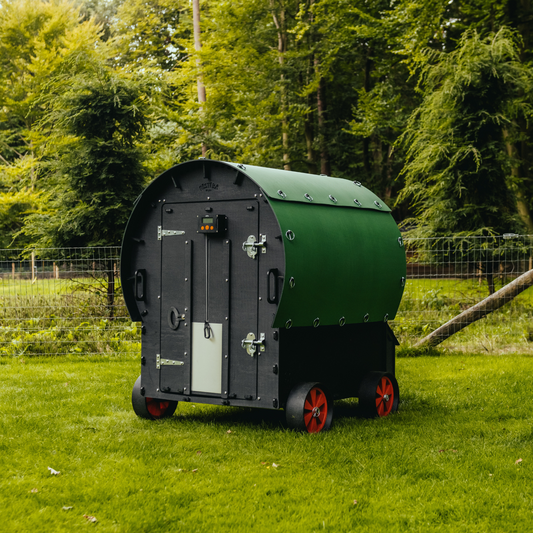
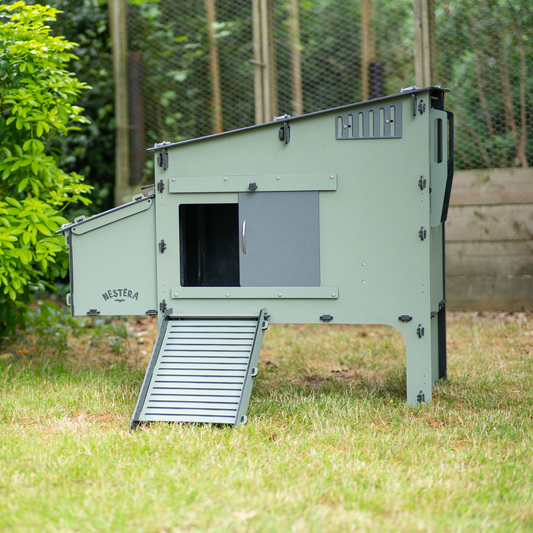
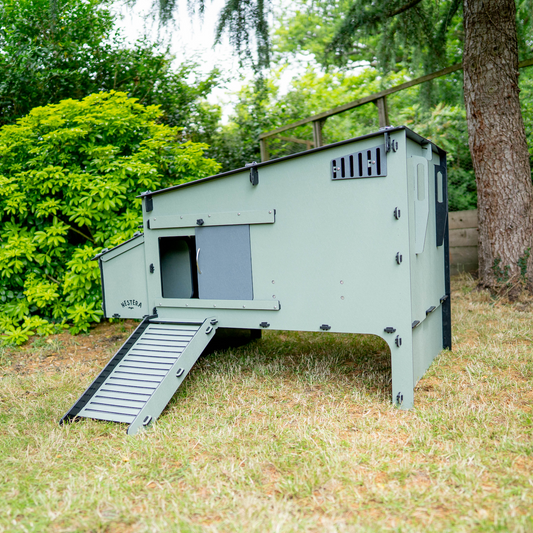
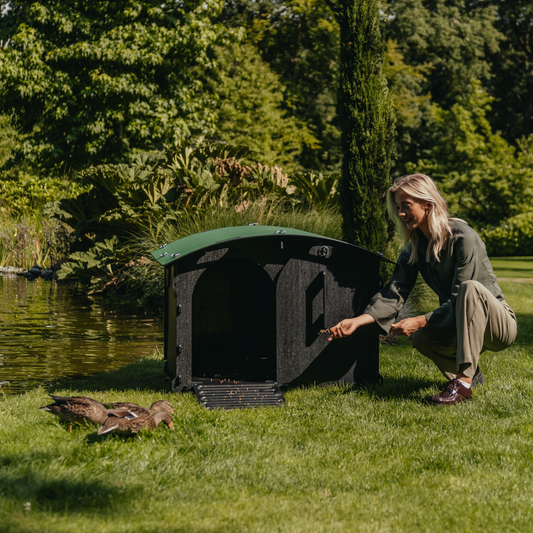
If your current coop is damp, draughty or splitting, winter is the moment it shows. Nestera's recycled-plastic chicken coops are weatherproof and draught-free by design, with built-in ventilation, no cracks for red mites and smooth surfaces that wipe clean in minutes – so the pre-winter deep clean takes a fraction of the time. Made from 70% recycled plastic and guaranteed for up to 25 years depending on the model, they are built to shrug off whatever winter throws at them, year after year.
This article was written by Libby, Nestera's Head of Animal Welfare.