Choosing the best bedding for your chicken coop is one of those small decisions that makes a big difference to your hens' health, your coop's hygiene and how much time you spend mucking out. The right bedding keeps things dry, soaks up droppings and odours, and gives your birds a soft, safe surface to scratch and nest on – while the wrong choice can trap moisture, harbour red mites or even cause serious harm if eaten.
Short answer: for most backyard flocks, dust-extracted wood shavings (such as aspen) or chopped hemp make the best all-round coop bedding – absorbent, low-dust and comfortable. Avoid cedar shavings and dusty or mouldy hay, and be cautious with straw, which can shelter red mites.

Chicken coop bedding options compared: pros and cons
There's no single "perfect" bedding – the best choice depends on your climate, your coop and how often you like to clean. Here's how the most common chicken coop bedding options stack up.
Wood shavings (aspen and softwood)
Wood shavings are the go-to bedding for good reason. They're highly absorbent, mop up moisture and odour well, and give a soft, comfortable surface for walking and nesting. Aspen is a popular hardwood choice because it's naturally low in aromatic oils and dust.
- Pros: very absorbent, widely available, comfortable, easy to scoop and replace.
- Cons: some bags are dusty – always choose dust-extracted shavings to protect your birds' airways.
- Avoid cedar: never use cedar shavings. The aromatic oils that give cedar its scent release fumes that can irritate chickens' delicate respiratory systems.
Hemp bedding for chickens
Hemp (made from the chopped, woody core of the hemp plant) has become a favourite among keepers who want a low-dust, long-lasting option. It's extremely absorbent, breaks down well for composting, and tends to need topping up less often than shavings.
- Pros: excellent absorbency, very low dust, soft underfoot, composts beautifully.
- Cons: usually more expensive and not always as easy to find as shavings.
Chopped straw
Straw has been used in coops for generations and is warm and cosy, especially in winter. The catch is that its hollow stems make ideal daytime hiding places for red mites, and standard straw is less absorbent than shavings or hemp. Chopped, dust-extracted straw is a better version if you want to use it. If red mites are a concern in your setup, read our 5 tips to avoid red mites in your chicken coop.
- Pros: warm and insulating, affordable, good for nest boxes.
- Cons: can shelter red mites, less absorbent, can grow mouldy if it gets damp.
Shredded paper and cardboard
Shredded paper or cardboard is a cheap, readily available option – handy if you have a shredder at home. It's soft and low-dust but flattens quickly and isn't very absorbent, so it needs changing more often.
- Pros: low cost, low dust, easy to source.
- Cons: compacts fast, less absorbent, can get soggy and matted.
Sand
Sand is popular for coop floors and runs in drier climates. It doesn't absorb moisture in the way organic beddings do; instead it lets droppings dry on top so you can sift them out like cat litter. Use coarse construction or river sand – not fine play sand, which is dusty.
- Pros: easy to spot-clean, dries quickly, doesn't rot, doubles as grit.
- Cons: heavy, poor insulation in cold weather, fine sand can be dusty.
What to avoid putting on your chicken coop floor
A few materials do more harm than good:
- Hay: chickens love to peck at hay, and long strands can build up in the crop and cause an impacted crop – a potentially serious problem. Hay also goes mouldy quickly, and mouldy bedding can release spores that harm your birds' lungs. If you choose to use it at all, keep it to nest boxes only and replace it often.
- Cedar shavings: as above, the aromatic oils can irritate the respiratory system. Stick to aspen or other untreated, low-oil woods.
- Dusty or mouldy anything: dust contributes to respiratory issues, and mould is dangerous. Always store bedding somewhere dry and bin any that smells musty.
How deep should chicken coop bedding be?
For most coops, a layer of bedding around 5–10 cm (2–4 inches) deep across the floor is plenty – enough to absorb droppings and cushion the floor without being wasteful. In nest boxes, a generous, fluffy handful keeps eggs clean and cushioned.
Some keepers use the deep litter method, where you keep adding fresh bedding on top of the old and let it slowly compost over winter, turning it occasionally. It can work well in larger, well-ventilated coops, but it relies on good airflow and dry conditions to avoid ammonia build-up – so for most smaller backyard coops, regular cleaning is simpler and more hygienic.
How often should you change coop bedding?
As a rule of thumb:
- Daily or every few days: remove visible droppings and any wet, soiled patches (droppings trays make this quick).
- Weekly: refresh the bulk of the floor bedding and check nest boxes.
- Monthly: empty the coop completely, scrub or hose it down, let it dry, then add fresh bedding.
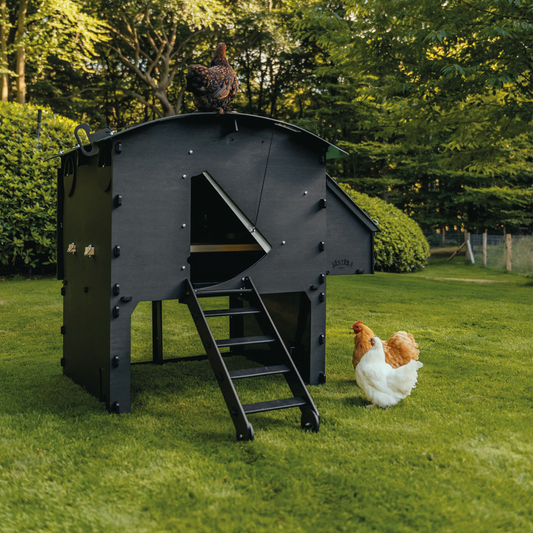
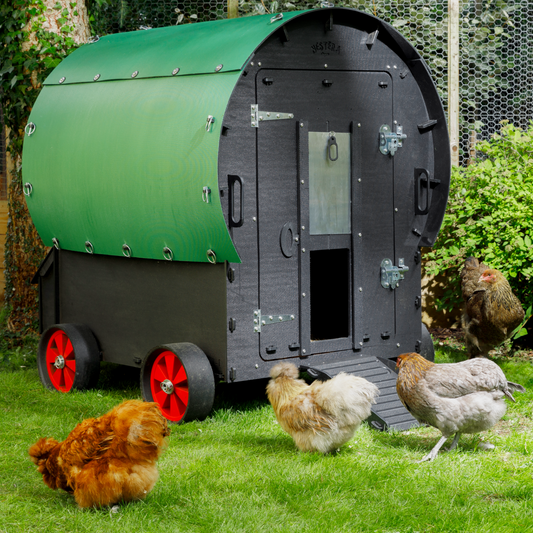
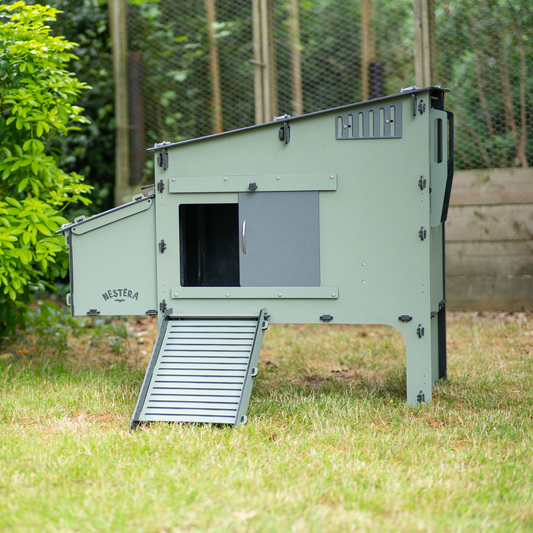
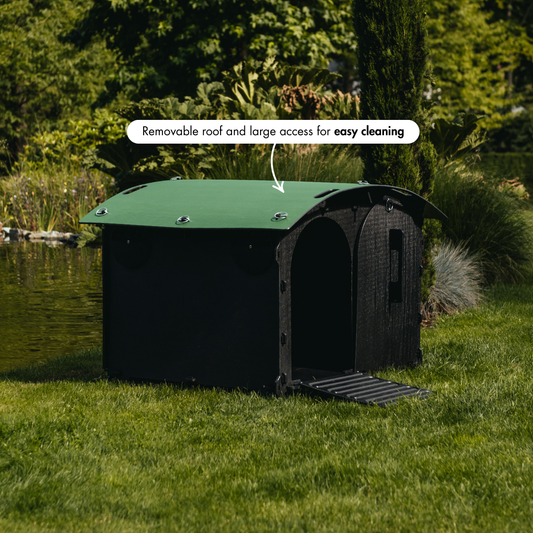
Damp, soiled bedding is the main cause of ammonia smells and respiratory problems, so when in doubt, change it sooner. This is far quicker in a smooth, easy-clean coop: our 70% recycled-plastic coops have no cracks or rough timber for muck (or mites) to lodge in, so a soiled tray scoops out in seconds and the whole coop hoses down and dries fast – meaning you tend to need less bedding and spend less time mucking out. Learn more about why a plastic chicken coop is easier to keep clean.
Dust, red mites and respiratory health
Two things matter most for your flock's lungs and comfort: dust and red mites. Chickens have sensitive respiratory systems, so always choose dust-extracted bedding and keep the coop well ventilated. For red mites, the bedding itself is only half the story – the coop's surfaces matter just as much. Smooth plastic gives mites nowhere to hide, whereas timber joints shelter them. If you want to stay ahead of an infestation, our guide on avoiding red mites is a good place to start.
Bedding also supports another natural behaviour: dust bathing. Hens love to work loose, dry material through their feathers to keep parasites at bay – here's why chickens need dust baths.
Nest-box bedding vs floor bedding
Nest boxes and the coop floor have slightly different jobs. On the floor, you want absorbency and easy cleaning, so shavings, hemp or sand work well. In nest boxes, you want softness and cushioning to keep eggs clean and unbroken – a deep, soft layer of shavings or hemp (or a little chopped straw) is ideal. Keep nest-box bedding topped up and clean, as that's where your eggs land. If you're still planning your setup, see how big a chicken coop should be to get the floor area and nest-box numbers right for your flock.
Frequently asked questions about chicken coop bedding
What is the best bedding for a chicken coop?
For most flocks, dust-extracted wood shavings (such as aspen) or chopped hemp are the best all-round choices – both are absorbent, low-dust and comfortable. Sand suits drier climates and easy spot-cleaning. The "best" option ultimately depends on your coop, climate and cleaning routine.
Is straw or wood shavings better for chickens?
Wood shavings are generally more absorbent and easier to keep clean, and they don't shelter red mites the way hollow straw stems can. Straw is warmer and cosier, which some keepers prefer for nest boxes in winter, but it needs changing more often to stay dry and mite-free.
What should you not put on a chicken coop floor?
Avoid hay (risk of impacted crop and mould), cedar shavings (irritating oils), and any dusty or mouldy material. These can cause respiratory problems or digestive issues.
Is hemp bedding good for chickens?
Yes – hemp is very absorbent, low in dust and long-lasting, and it composts well. It usually costs more than shavings but many keepers find it worth it for the reduced dust and less frequent topping-up.
The right bedding starts with the right coop
Great bedding works best in a coop that's easy to keep clean and hard for mites to colonise. Our range of recycled-plastic chicken coops is built with smooth, crack-free surfaces that wipe and hose down in minutes – so whichever bedding you choose, you'll use less of it, change it faster and give your flock a cleaner, healthier home.