Knowing how to keep chickens warm in winter is mostly about helping your hens do what they already do well – not about cranking up the heat. Healthy adult chickens are remarkably cold-hardy, so the keeper's real job is to keep the coop dry, draught-free and well ventilated, protect the flock from wind and damp, and stop the water from freezing. Get those basics right and your birds will sail through the coldest months.
Short answer: keep your chickens warm in winter by draught-proofing the coop without sealing off ventilation, using dry deep-litter bedding, blocking the prevailing wind, keeping drinking water unfrozen, fitting wide perches so hens can cover their feet, and choosing cold-hardy breeds. Most healthy hens do not need a heat lamp – and lamps are a serious fire risk.

If you're wondering whether your hens actually feel the cold and how their bodies cope, our companion guide explains the biology in detail: how do chickens stay warm in winter. This article focuses on the practical actions you can take to help them.
Do chickens need heat in winter?
For the vast majority of backyard flocks, the answer is no. A chicken's downy under-feathers trap a layer of warm air against the skin, and when it's very cold she fluffs up to trap even more – effectively wearing her own duvet. Cold-hardy breeds happily tolerate freezing temperatures as long as they stay dry and out of the wind.
What actually harms chickens in winter is not the low temperature itself but damp and draughts. Moisture-laden, poorly ventilated air leads to frostbitten combs and respiratory problems far more often than cold alone. So winter chicken care is really about managing moisture and airflow, not adding warmth.
How to keep chickens warm in winter: the essentials
Here are the things that make the biggest difference to keeping your flock comfortable through the cold season.
1. Draught-proof the coop – but never seal off ventilation
This is the balance every keeper needs to strike. A draught is a steady stream of cold air blowing across roosting birds at night, and that's what you want to stop. Ventilation is the gentle exchange of air, usually high up near the roof, that lets damp, ammonia-laden air escape. You need to block draughts and keep ventilation flowing.
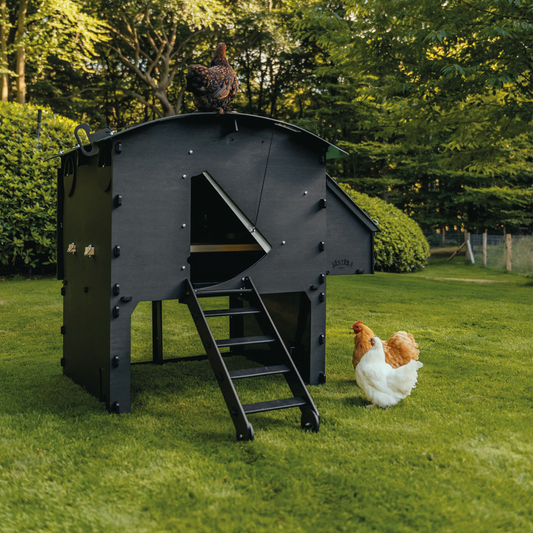
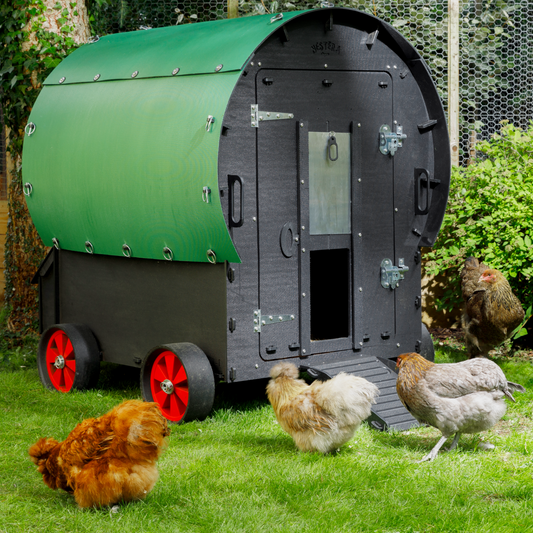
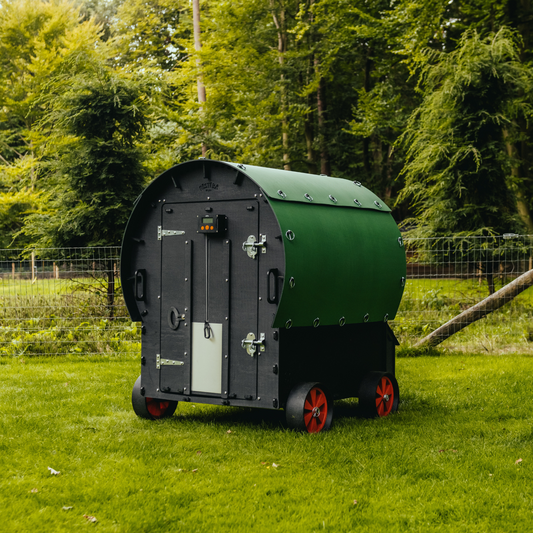
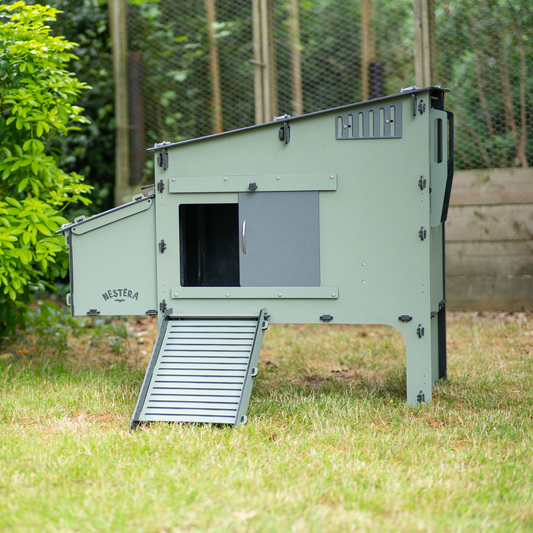
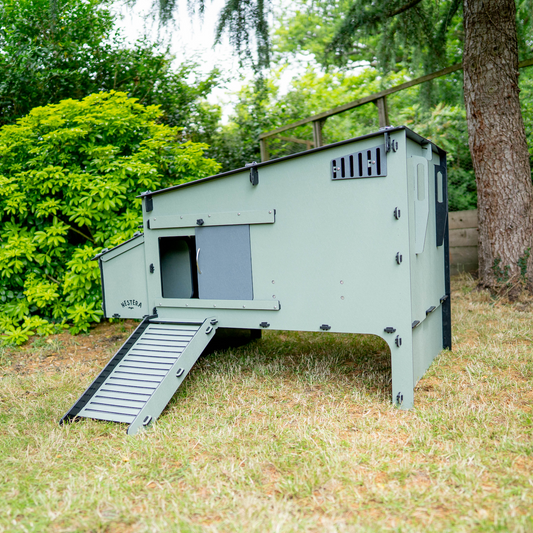
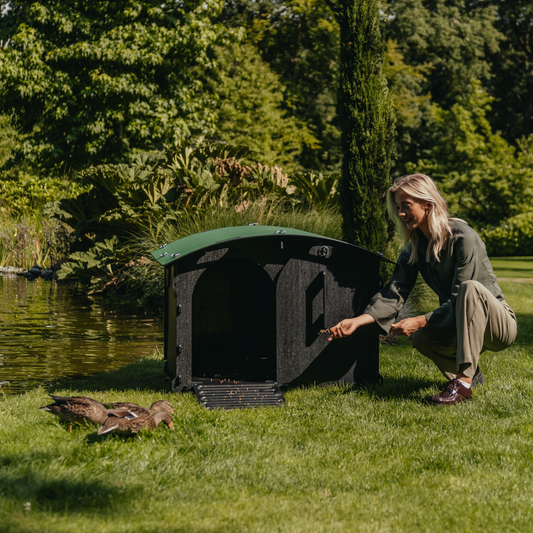
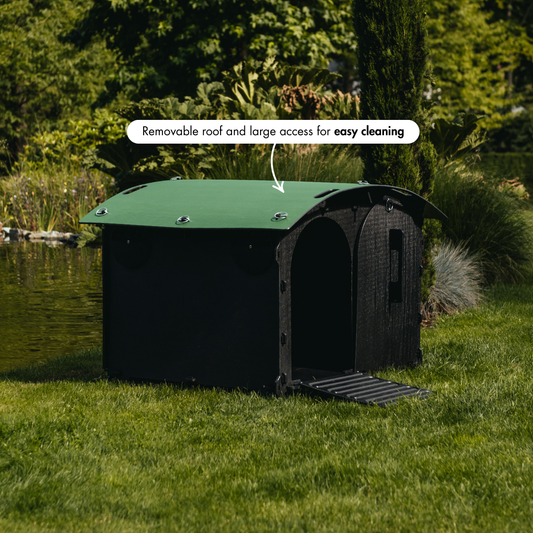
Check the coop for gaps around doors, low vents and joints where cold air streams in at perch height, and block those. Leave the high-level vents wide open. A smooth, well-designed coop makes this easy – our recycled-plastic chicken coops are built draught-free with vents positioned above the birds so moisture escapes without chilling the flock.
2. Use dry deep-litter bedding
Dry bedding is one of your best tools against winter damp. The deep-litter method – building up a thick, dry layer of absorbent bedding and turning it regularly – soaks up droppings and moisture and gives a small amount of gentle warmth as the lower layer slowly composts. The key word is dry: wet, compacted bedding does the opposite and pumps moisture into the air.
Top up little and often, remove damp patches quickly, and change bedding more frequently than in summer, because birds spend longer inside and droppings build up faster. For a full comparison of materials, see our guide to the best bedding for chicken coops.
3. Block the wind in the run
Wind strips warmth from birds far faster than still cold air. If your run catches a regular blast from one direction, set up a windbreak on that side – a tarpaulin, clear panels, straw bales or hurdles will all disperse the wind and create a sheltered corner. Covering part of the run with a roof or tarp also keeps the ground drier, which matters because birds standing on cold wet mud lose heat through their feet.
4. Stop the drinking water from freezing
Chickens must have access to unfrozen water every day, even in a hard frost. Frozen drinkers are one of the most common winter headaches, and plastic ones can go brittle and split. Empty drinkers at dusk, refill with fresh water each morning, and consider moving them into a sheltered spot during the day. For more tricks, read how to prevent your poultry drinkers from freezing in winter.
5. Fit wide perches so hens can cover their feet
Feet are a chicken's least-insulated part, so a roosting hen settles down over her toes to keep them warm under her body feathers. That only works if the perch is wide enough for her to sit flat-footed. A flat perch around 5cm (2 inches) wide lets her cover her feet completely – far better against frostbite than a narrow, round pole that forces her to grip and leaves toes exposed.
6. Choose cold-hardy breeds
If you're still choosing your flock and live somewhere with hard winters, breed matters. Heavier, full-bodied breeds with small combs – such as Orpingtons, Wyandottes, Plymouth Rocks, Brahmas and Sussex – cope with cold far better than light Mediterranean breeds with large, frost-prone combs. Whatever you keep, take extra care of very small or fine-feathered birds, which have less body mass to stay warm.
7. Feed for warmth
A well-fed bird generates more body heat. Offer a scratch of higher-energy grains such as mixed corn in the late afternoon – digesting it overnight gives a little extra warmth at the coldest time. Keep at least a week's worth of feed in store in case bad weather stops you reaching the shop. See more seasonal feeding tips in what can chickens eat in winter.
What NOT to do: heat lamps and over-insulation
The instinct to give cold hens extra warmth is kind, but two popular "solutions" do more harm than good.
- Avoid heat lamps. They are a genuine fire risk – dust, feathers and bedding are highly flammable, and a knocked or failed lamp has burned down many coops. Worse, if a lamp loses power overnight, the sudden temperature crash can be fatal to birds that had grown reliant on it. Healthy adult hens acclimatise far better when left to regulate their own warmth.
- Don't over-insulate or seal the coop. Wrapping a coop airtight traps the moisture chickens breathe out and the ammonia from droppings, leading to damp, frostbite and respiratory illness – the exact problems you were trying to prevent. Ventilation always wins over insulation.
If your current coop is draughty, damp or hard to clean, replacing it does more for winter welfare than any gadget. A draught-free, well-ventilated recycled-plastic coop stays dry, wipes clean and won't harbour the damp that timber coops trap.
Frequently asked questions
Do chickens need heat in winter?
Most healthy adult chickens do not. Their feathers insulate them well, and they cope with freezing temperatures as long as they stay dry and out of draughts. Added heat is usually unnecessary and a heat lamp introduces a real fire risk.
What temperature is too cold for chickens?
There's no exact figure, and cold-hardy breeds tolerate well below freezing. Damp and wind are far more dangerous than low temperature alone. Watch any small, fine-feathered or unwell birds especially closely, and keep everyone dry and sheltered.
Should I put a heat lamp in my chicken coop?
Generally no. Heat lamps are a leading cause of coop fires, and birds that become dependent on one are at serious risk if it fails overnight. Focus instead on a dry, draught-free, well-ventilated coop and let your hens regulate their own warmth.
How do I stop my chickens' water freezing?
Empty drinkers at dusk, refill with fresh water each morning, and keep them in a sheltered spot. There are several practical methods in our guide to preventing poultry drinkers from freezing in winter.
Keep your flock cosy this winter
Keeping chickens warm in winter comes down to a dry, draught-free, well-ventilated coop, shelter from wind and damp, unfrozen water and a little extra feed – not artificial heat. If your coop is letting in draughts or holding damp, a Nestera recycled-plastic chicken coop gives your hens a clean, dry, well-ventilated home that's built to keep them comfortable through every season, with no cracks for damp or red mites and an easy wipe-clean finish.