If you're wondering why is my chicken losing feathers, take a breath — in most cases it's completely normal. Chickens are covered in thousands of feathers, and shedding a few (or even a lot, all at once) is usually nothing to worry about. The trick is telling harmless feather loss apart from the signs that need your attention.
Short answer: The most common reason a chicken loses feathers is the annual autumn moult, followed by broodiness and mating wear from a cockerel. These are all natural. Feather loss becomes a concern when it's paired with red mites or lice, bullying and feather pecking, illness, or stress — situations where the skin looks sore, scabbed, or the bird seems unwell.
In this guide we'll cover the normal causes of feather loss in chickens, the causes for concern, how to tell them apart, and how to support a moulting hen so she grows her new plumage back in good condition.
Normal vs. Abnormal Feather Loss: How to Tell the Difference
Feather loss in chickens falls into two broad camps. Knowing which one you're looking at is the key to keeping your flock healthy and stress-free.
Normal (physiological) feather loss happens for natural reasons — the yearly moult, a broody hen lining her nest, or a hen worn by a cockerel. The skin underneath looks healthy, and new feathers grow back.
Feather loss that's a cause for concern (pathological) is usually preventable — parasites, bullying, stress, injury or poor nutrition. You'll often see red, scabbed or broken skin, restless behaviour, or a bird that's off-colour.

Why Is My Chicken Moulting? The Annual Autumn Moult
The single most common reason a chicken loses feathers is the annual moult. Once a year, usually as the days shorten in late summer and autumn, hens drop their old, worn feathers and grow a fresh set ready for winter. You may notice a sudden scattering of feathers around the coop and run, and a patchier-looking bird for a few weeks.
Do chickens lose feathers in autumn? Yes — autumn is peak moulting season. Egg laying often slows or stops during this time, because the hen is putting her energy into regrowing feathers rather than producing eggs. This is completely normal and part of the yearly cycle for chickens.
New feathers emerge as pin feathers — spiky, blood-filled quills wrapped in a waxy sheath. These are tender and can be sore if knocked, so try not to handle a moulting hen more than necessary.
Feather Loss on a Hen's Back and Neck from a Cockerel
If you keep a rooster, feather loss on a hen's back, neck or shoulders is very often simply mating wear. During mating the cockerel grips the hen's back and neck feathers with his beak and claws, which over time leaves patchy bald spots on his favourite hens.

What to do
Fit a hen saddle (also called a hen apron) to protect the worn area. These fabric covers loop under the wings and shield her back while the feathers regrow. If a single cockerel is over-mating, reducing the hen-to-cockerel ratio also helps spread the wear.
Broody Hens and Feather Plucking
A broody hen will often pluck the feathers from her own chest and belly to create a brood patch — an area of bare skin that lets her warm her eggs directly. If you find loose breast feathers in the nest box and a hen who refuses to leave it, broodiness is the likely cause.

Good news: This is entirely natural. The feathers grow back once the broody phase ends, often around the same time as the autumn moult.
When Feather Loss Is a Cause for Concern
Sometimes a chicken losing feathers points to a problem you need to act on. Here are the main causes for concern and how to spot them.
Red Mites and Lice
Parasites are a leading cause of abnormal feather loss. Birds preen and scratch obsessively to relieve the irritation, breaking and pulling out feathers in the process.

Poultry lice live on the bird and leave clumps of pale eggs at the base of the feathers, especially around the vent.
Red mites hide in the coop by day and feed on your hens at night, leaving birds pale, itchy and reluctant to roost.
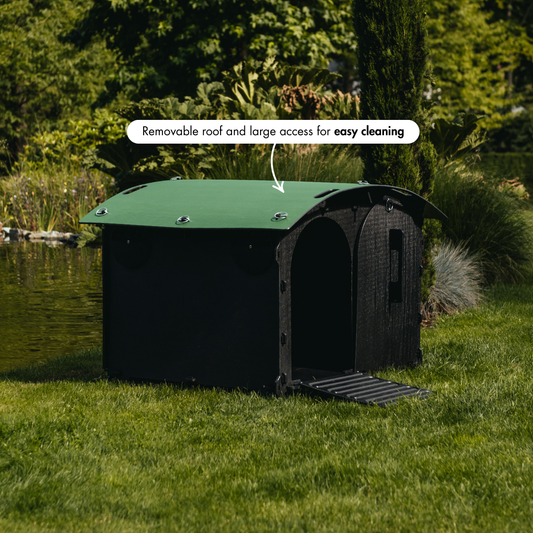
If you suspect parasites, it's worth learning how to check your hen for lice and red mites so you can confirm the problem and act quickly. A smooth, easy-clean coop with no cracks for mites to hide in makes a huge difference here. For any treatment, always speak to your vet or a qualified poultry specialist — chickens are food-producing animals, and using unapproved products can contaminate eggs or meat.
Feather Pecking and Bullying in the Flock
Feathers missing from the head, neck, back or vent of a hen low in the pecking order often points to bullying. Chickens establish dominance by pecking, and this gets worse when birds are overcrowded, bored, or when new hens are introduced.

What to do
Use a poultry-safe anti-pecking spray to deter feather pecking.
Separate a persistent bully for a few days to reset the hierarchy, then reintroduce gradually.
Give the flock more space and enrichment (see below) so they peck the ground, not each other.
Stress, Boredom and a Lack of Space
Chickens need to forage, scratch, dust bathe and explore. When they can't, frustration spills over into feather pecking. Stress from predators prowling around the run, a draughty coop or a coop that's too small can all trigger feather loss.
What to do
Provide plenty of outdoor space and a secure, predator-proof run.
Add enrichment: perches, dust baths, scratching material and a few chicken-safe insects to forage for — a great natural protein boost too.
Make sure the coop is the right size and well ventilated so birds aren't crowded or stressed.
Predator Attacks and Injury
A sudden, large patch of missing feathers — especially on the side or tail — can mean a near-miss with a predator. Chickens are "loose-feathered," meaning a fox or dog may end up with a mouthful of feathers while the bird escapes. Check the skin for wounds and reinforce your run and coop to keep predators like foxes and dogs out.
Poor Nutrition or Dehydration
Weak, brittle feathers that snap easily, or feathers with visible stress lines, can point to a diet short on protein or key nutrients, or to a lack of clean water. Feathers are roughly 85% protein, so nutrition matters — especially during a moult.

How to Support a Moulting Hen
Regrowing a full set of feathers is hard work, so a little extra care during the moult goes a long way:
Boost protein. Feed a balanced layer feed and add extra protein — mealworms, chicken-safe insects or an amino-acid supplement help feathers regrow strong.
Reduce stress. Keep the routine calm, avoid introducing new birds, and give the flock plenty of space.
Go easy on handling. Pin feathers are sensitive and can bleed if knocked, so don't pick up or cuddle a moulting hen more than you have to.
Keep things clean. A clean, dry, easy-to-disinfect coop keeps parasites at bay so feathers can regrow without interference.
When to Consult a Vet
Most feather loss resolves on its own. Speak to your vet or a qualified poultry specialist if you notice bald patches with sore, bleeding or scabbed skin; a bird that's lethargic, pale or off its food; signs of parasites you can't control; or feather loss that doesn't grow back after a normal moulting period. We don't offer veterinary advice or treatment dosing here — a professional can diagnose the cause and recommend a safe, egg-friendly treatment.
Frequently Asked Questions
Why is my chicken losing feathers but still acting normal?
If your hen is eating, drinking and behaving normally, the most likely cause is a natural moult, broodiness or mating wear from a cockerel. Check the skin underneath — if it looks healthy and pink rather than red or scabbed, there's usually nothing to worry about.
Do chickens lose feathers in autumn?
Yes. Autumn is the main moulting season. As daylight hours shorten, hens drop their old feathers and grow a fresh set for winter, often pausing egg laying while they do.
Why is my chicken losing feathers around its vent or back?
Feather loss around the vent can signal lice or mites, so check there first. Loss on the back and neck is usually mating wear from a cockerel. If the skin is red or scabbed, or other birds are pecking, treat it as a cause for concern.
How long does it take for chicken feathers to grow back?
A full moult typically takes around 6 to 12 weeks for feathers to regrow, depending on the bird, the time of year and her diet. Extra protein and low stress help speed things along.
Give Your Flock a Clean, Mite-Free Home
Many feather-loss worries come down to parasites and stress — both far easier to manage in the right home. Nestera's recycled-plastic chicken coops have smooth surfaces and no cracks or crevices for red mites to hide in, so they're quick to clean and disinfect, and built to last up to 25 years depending on model. A healthy, hygienic coop is one of the best things you can do to keep feathers where they belong — on your hens.