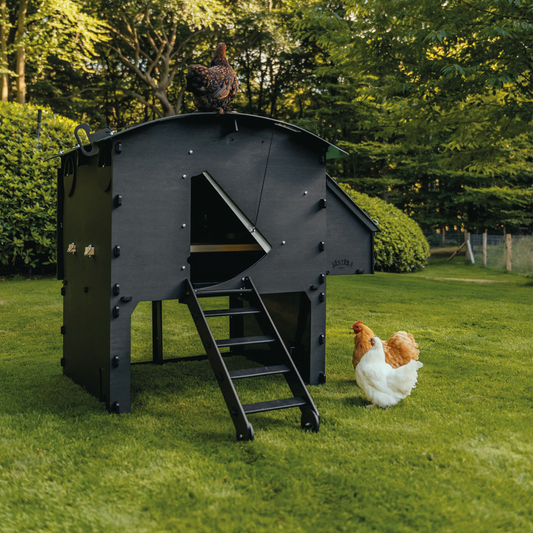
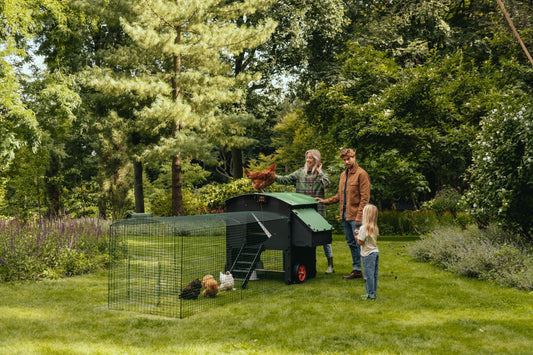
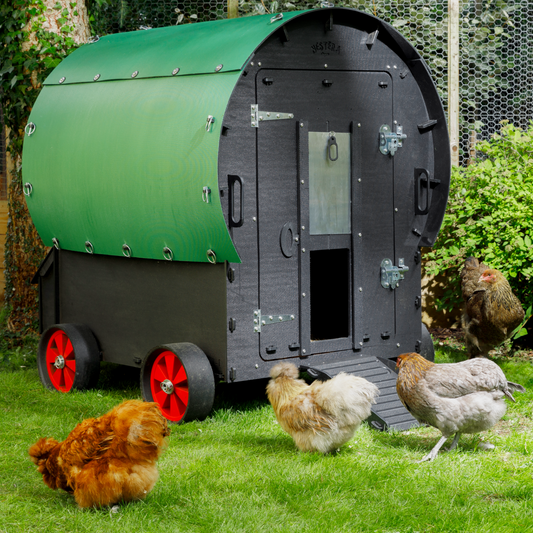
Learning how to train chickens to use a coop is far gentler than it sounds: you don't need to lock them away all day. Shutting a flock inside for days on end was once standard advice, but as our understanding of animal welfare has grown, that approach now looks both outdated and unnecessarily stressful. The kinder, more reliable method works with your chickens' natural roosting instinct rather than against it.
Short answer: To train chickens to use a coop, let them range or use a small run by day, then place them on the perch inside the coop each evening at dusk for several nights. Their instinct to roost at sunset quickly turns the coop into "home", and most birds soon head in on their own.
Why locking chickens in all day is the wrong way to train them

Keeping chickens shut in the coop during daylight hours causes unnecessary stress—especially for new birds still adjusting to their surroundings. A coop is designed as a safe place to sleep and lay, not as daytime housing. Confine a flock there from dawn to dusk and you remove the space, foraging and fresh air they need to settle happily.

The heat from several birds, combined with warm weather, can quickly make a closed coop uncomfortable or even dangerous. On top of that, food and water left inside the coop often become contaminated or run dry, adding to the birds' distress. If you're dealing with a brand-new flock that simply refuses to go in, that's a slightly different settling-in problem—see our guide on why chickens won't go into a new coop.
The kinder method: train chickens to roost in the coop at dusk
The most effective way to train chickens to use a coop is to harness the instinct they already have. As the light fades each evening, chickens look for a safe, elevated place to roost. Give them a coop and a comfortable perch at that exact moment, and you're teaching them where "home" is at the very time they most want to find it.
Step 1: Use a small run by day
For the first few days, keep your flock in a small, secure run attached to the coop during daylight. A contained area means the birds stay close to home and are far easier to gather as the light begins to fade. It also keeps them safe while they learn the layout of their new patch.
Step 2: Place them on the perch each evening at dusk
As night falls, gently guide the birds into the coop. If they don't go in by themselves, calmly lift each one and set it on the perch after dark, when chickens are at their most docile. Repeat this short evening routine for several nights. You're building a simple association: dusk means coop, coop means safety and sleep.
Step 3: Let the routine take over
After a handful of nights, most chickens will head back to the coop on their own at sunset. Getting the timing right matters—our guide on the best time to put chickens in the coop explains exactly when to settle them for the smoothest results.
How to get chickens to go in the coop at night automatically
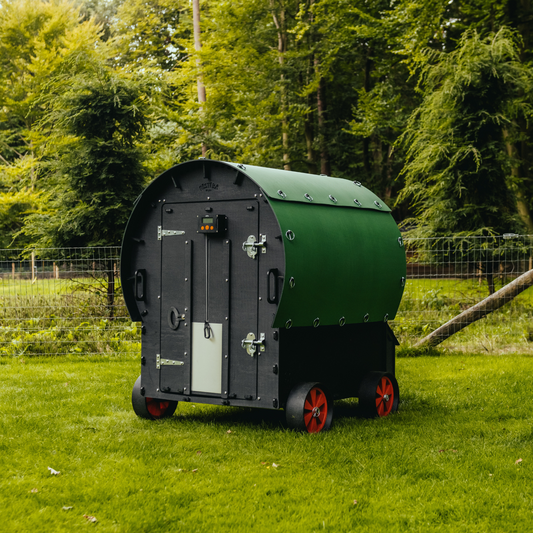
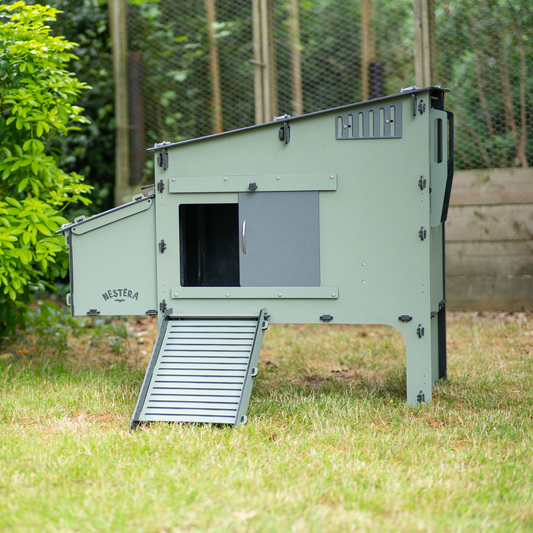
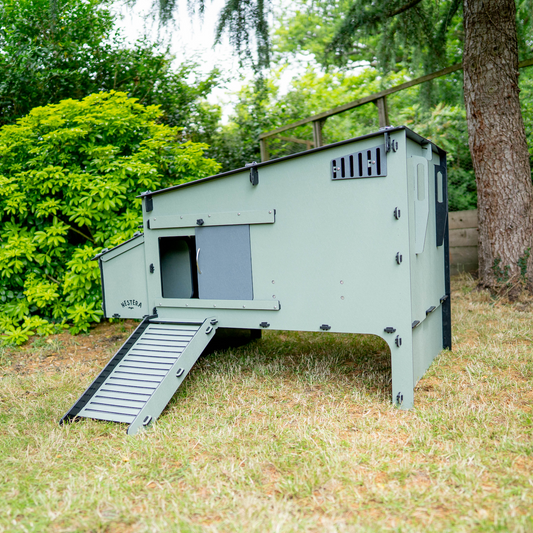
Once the roosting habit is forming, a light-sensor automatic door reinforces it beautifully. The Automatic Door Opener closes the coop shortly after the birds have gone in at dusk and opens it again at first light—so the daily rhythm of "in at night, out in the morning" happens like clockwork, even on the evenings you're not there. Because it responds to changing light through the seasons, it keeps reinforcing the routine your chickens have learned and gives you reliable, predator-safe nights. It fits the Nestera House and Lodge coops (and many other brands).
Key takeaways
- Skip all-day confinement—it's stressful and unsafe in warm weather.
- Use a small run by day so the flock stays close and is easy to gather at dusk.
- Place birds on the perch each evening for several nights to build the roosting habit.
- Be patient—most chickens settle into the routine within a few nights.
- An automatic, light-sensor door locks in the habit and keeps the flock safe overnight.
Frequently asked questions
How long does it take to train chickens to use a coop?
Most chickens learn within three to seven nights. Place them on the perch at dusk each evening and keep them in a small run by day, and the roosting instinct does most of the work. Nervous or newly moved birds may take a little longer—patience and a consistent routine are what count.
How do I get chickens to go in the coop at night on their own?
Settle them on the perch at dusk for several consecutive nights so they associate the coop with safe sleep. Once the habit forms, they'll head in at sunset by themselves. A light-sensor automatic door then closes behind them, reinforcing the routine night after night.
Should I lock chickens in the coop for a few days to train them?
No. All-day confinement is outdated and stressful, and a closed coop can overheat in warm weather. Let your flock range or use a run by day, and concentrate the training on the evening roosting routine instead.
Why won't my chickens roost in the coop?
Often it's a new-flock settling issue or a timing one rather than a training failure. If your birds are brand new to their home, read why chickens won't go into a new coop; if they're going in too early or too late, see the best time to put chickens in the coop.
Make the routine effortless
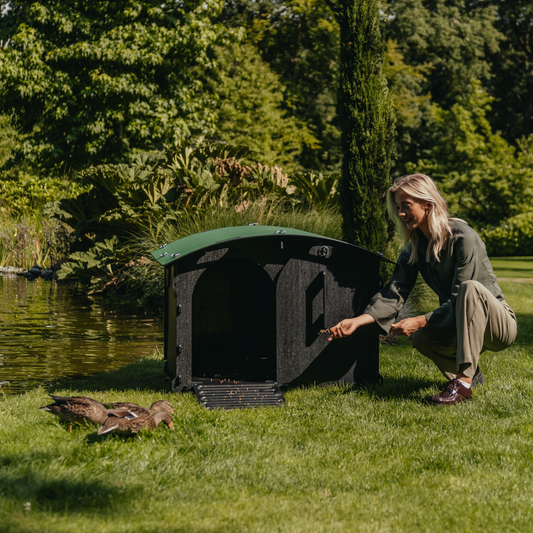
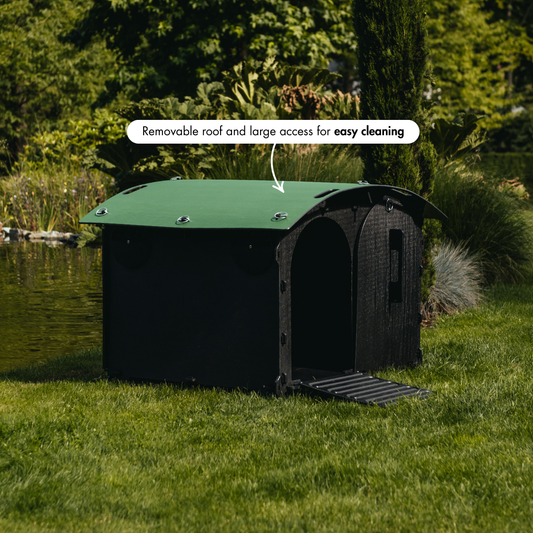
Train your flock gently, then let technology hold the habit in place. Pair a Nestera recycled-plastic coop with the Automatic Door Opener for stress-free dusk-to-dawn protection—your chickens learn where home is, and the door makes sure they're safely shut in every single night.